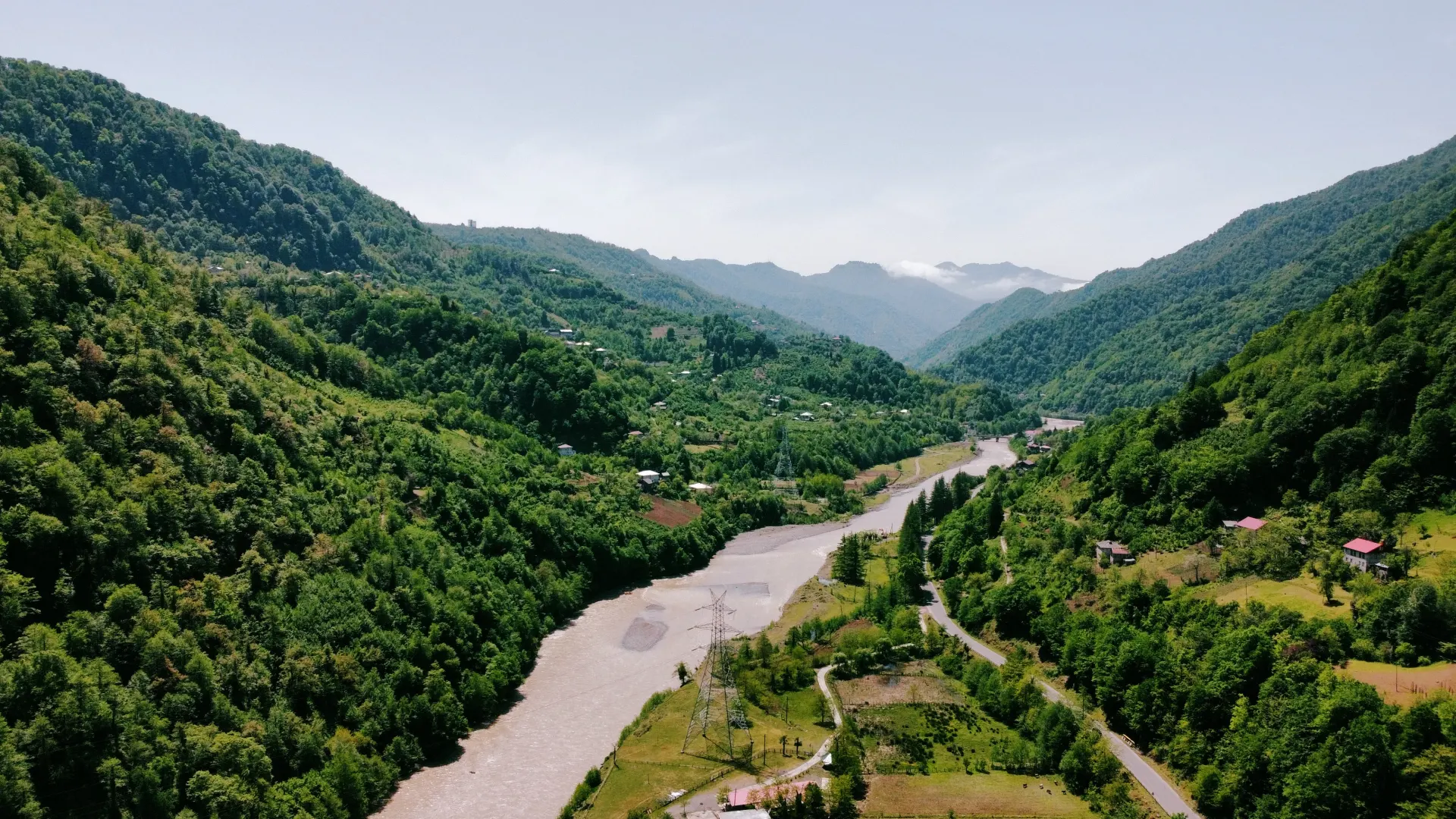
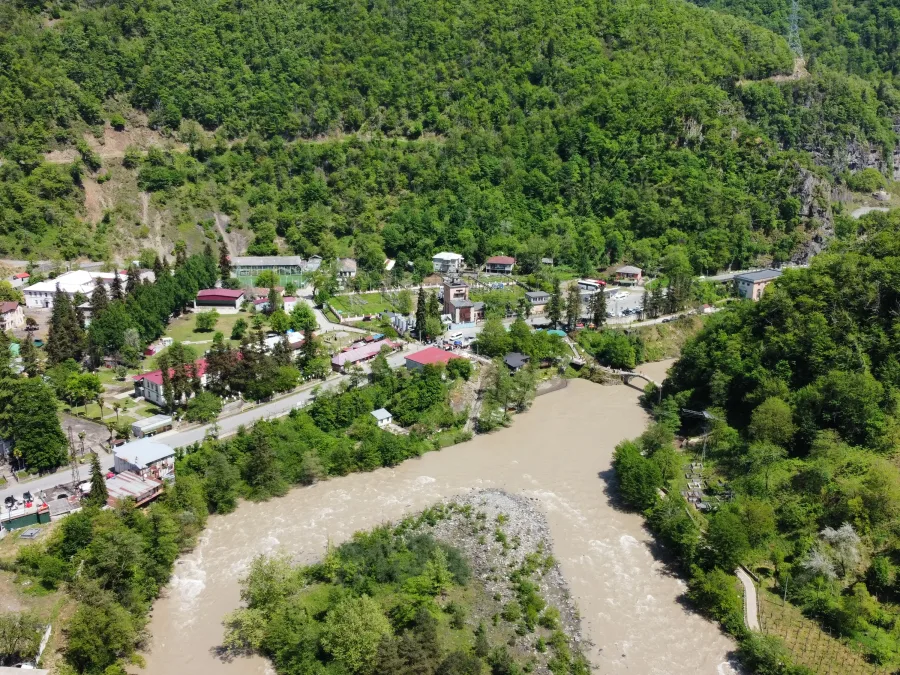
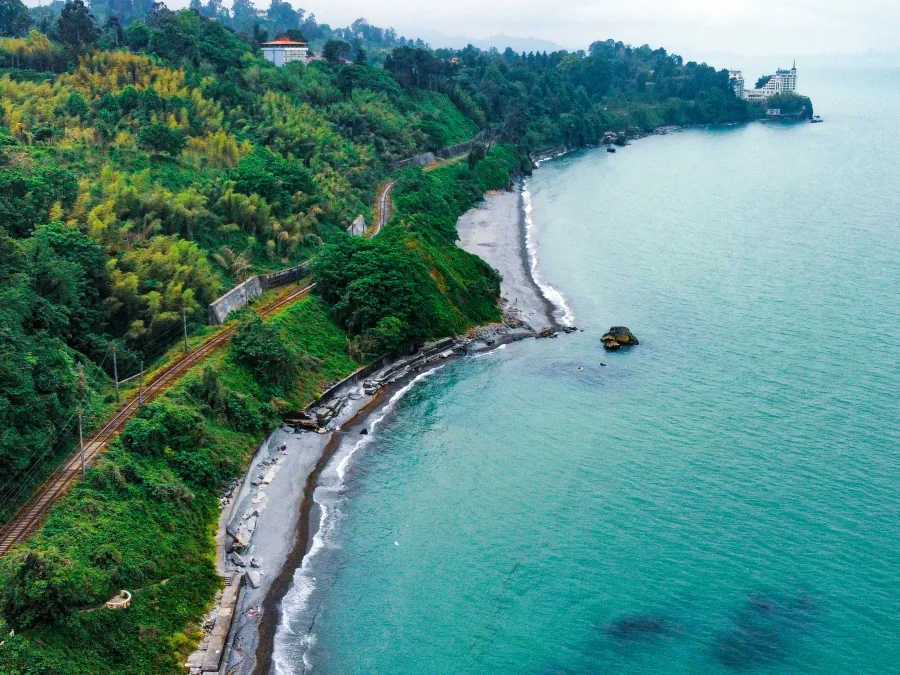
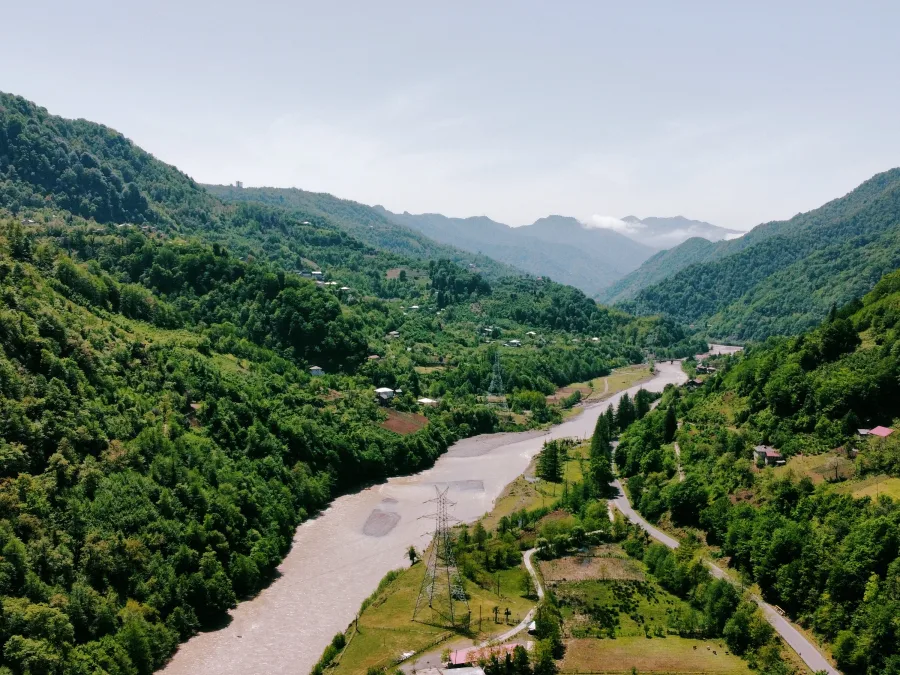
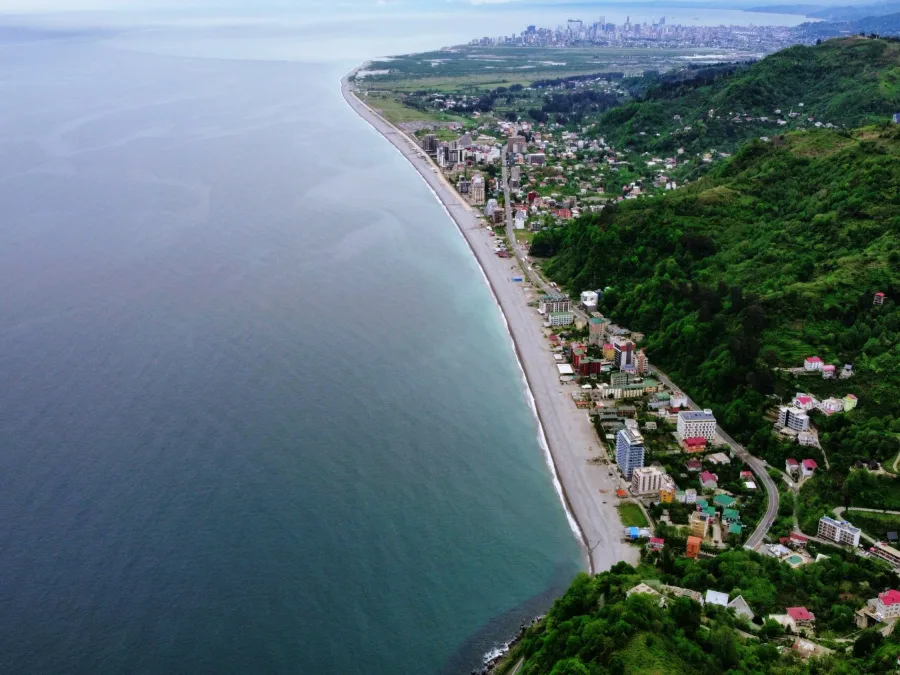
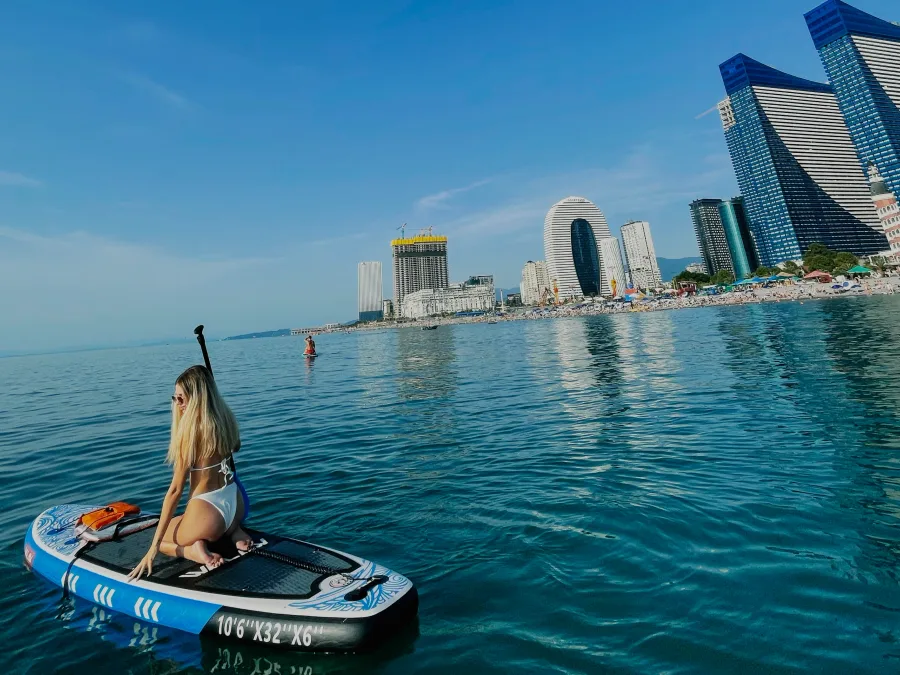
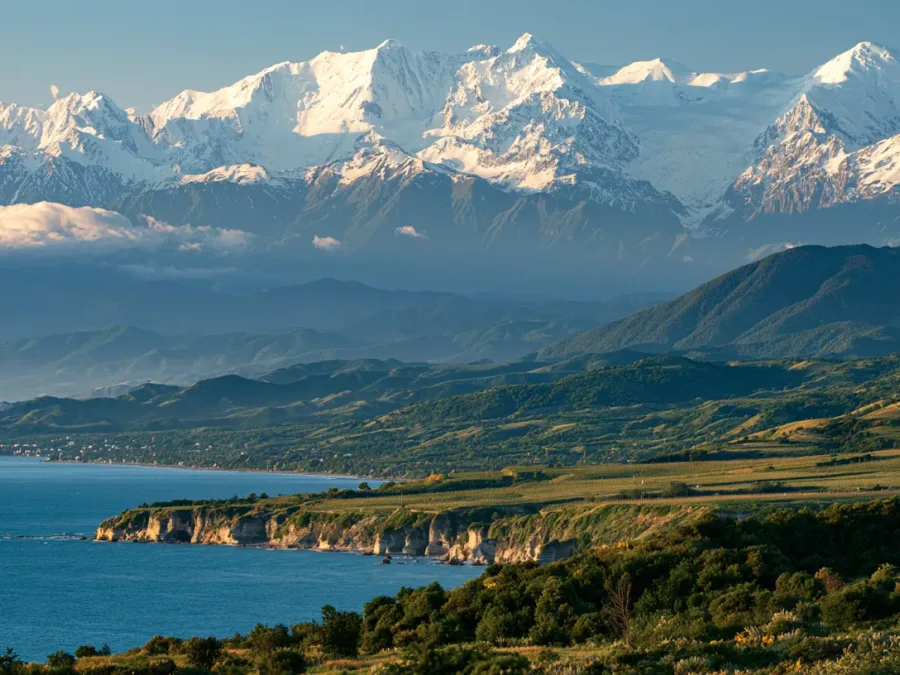
Adjara works as two regions in one. On the coast there is Batumi, beaches and humid subtropics that stay green even in winter. An hour inland the mountain part begins: passes, waterfalls and villages the asphalt never reaches.
What to see
Batumi — the seafront, the botanical garden, Gonio fortress nearby.
Kobuleti and Chakvi — a quiet shoreline and the tea plantations where Georgian tea began.
Makhuntseti waterfall and Queen Tamar’s bridge — the standard mountain stop, 30 km from Batumi.
The Khulo–Tago cable car — 1,900 metres across a gorge with no intermediate pylons.
The Goderdzi pass and Beshumi plateau — high country at two thousand metres, open in summer.
Mtirala National Park — around 4,500 mm of rain a year.
Getting there
Batumi has an airport; from Tbilisi it is about five hours by train or six by road. Inland public transport is thin, and the mountain part is easier to see with a driver.
When to go
June to September for the sea, May to October for the mountains. The coast is rainy in autumn and winter, which is exactly when the mountains are emptiest.
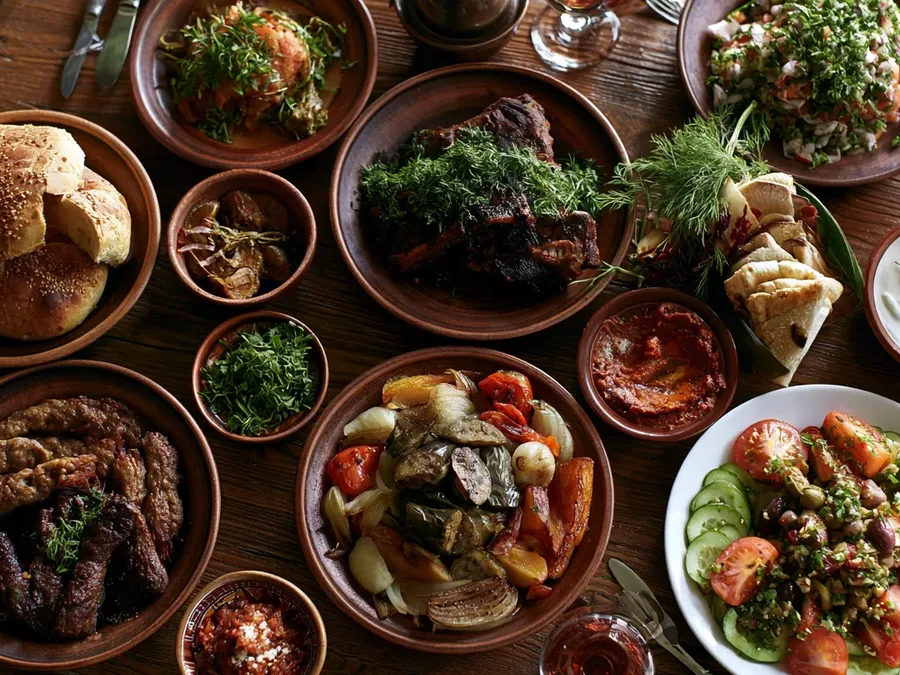
Khachapuri in Batumi and in Kutaisi are two different dishes with one name. Khinkali are eaten by hand in a set order, or the broth ends up on the table. And a "dry white" in Kakheti is not the drink you were expecting. What to order, how to eat it, and where it will be the real thing.
Every beach here is pebble, and that is the first thing to accept. The second: they differ by the shape of the sea floor, not the surface — some stay shallow for twenty metres, others drop off two steps in. A place-by-place breakdown of who suits which.
A country you can drive across in a day, where four hours take you from the beach to a glacier. And where a week covers about a quarter of what you planned. A breakdown by region: what to see, how many days it honestly takes, and where people miscalculate.
 Mituda