 Mituda
Georgia plays tricks with scale. The distances look trivial on a map: under four hundred kilometres from Tbilisi to Batumi, barely a hundred and fifty to Kazbegi. A week seems like plenty.
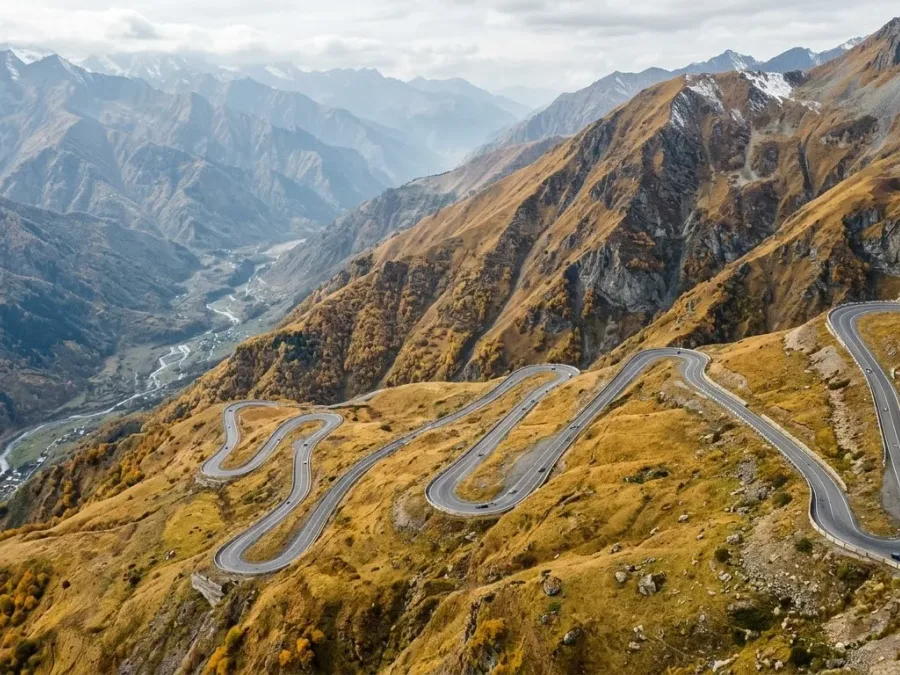
In practice almost all of those kilometres are mountain switchbacks where average speed rarely passes sixty. Those hundred and fifty kilometres to Kazbegi are three hours each way, and with the stops you actually came for, a full day from dawn to dark. Anyone who plans "Kazbegi in the morning, Kakheti in the evening" arrives tired at both and remembers neither.
So the breakdown below is not a list of sights but an answer to the question of what each one costs in time. The days in the headings are honest ones, with the driving and the stops, not what a navigation app estimates.
Tbilisi and Mtskheta: two days
The capital sits in a narrow valley between hills, which is why the whole city climbs in terraces. Worth knowing in advance: the map shows four hundred metres between two points, and between them are forty metres of elevation and a staircase.
The historic core walks in a day, but the best of it is not on the restored tourist streets: it is in the courtyards between them. The Tbilisi courtyard is a genre of its own — a shared gallery to the first floor, a vine overhead, somebody’s laundry and almost always an open gate. Walking in is fine; locals are used to it.
- Abanotubani — the sulphur bath quarter, brick domes pushing straight out of the ground. By legend the city began with these springs. Baths are hired by the hour; evening is better.
- Narikala — a 4th-century fortress above the Old Town. A cable car runs up from Rike park; walk down through the Botanical Garden instead of riding back.
- Rustaveli Avenue — theatres, museums, parliament. The National Museum earns its time for the Golden Fund: Colchian goldwork from the 3rd to 1st centuries BC.
- Mtatsminda — a funicular, a park and the whole city from above. Go at sunset.
- The Dry Bridge — a flea market where Soviet cameras and Georgian enamel turn up among the junk.
Mtskheta is twenty minutes away — the ancient capital where Georgia adopted Christianity in the early 4th century. Here stand the 11th-century Svetitskhoveli cathedral and the 6th-century Jvari monastery on the hill above the meeting of the Aragvi and the Kura, both UNESCO World Heritage sites.
From Jvari you can see the two rivers running side by side without mixing: the Aragvi lighter, the Kura darker, with the boundary holding for a few hundred metres. In spring, when there is more water, the contrast is sharper.
Kazbegi and the Military Road: a day, better two
The country's best-known image is the 14th-century Gergeti church on its own hill with Mount Kazbek behind it. That is what people come for, and it earns it: the church is small, the mountain behind it is enormous, and the scale only lands in person.
The drive is half the experience. Ananuri fortress, 16th to 17th century, on the Zhinvali reservoir — turquoise in May, drawn down by September. Pasanauri, where the White and Black Aragvi run side by side in two different colours for a while. The Friendship of Peoples arch from 1983, a concrete half-ring with a mosaic hanging right over the drop at the Jvari pass.
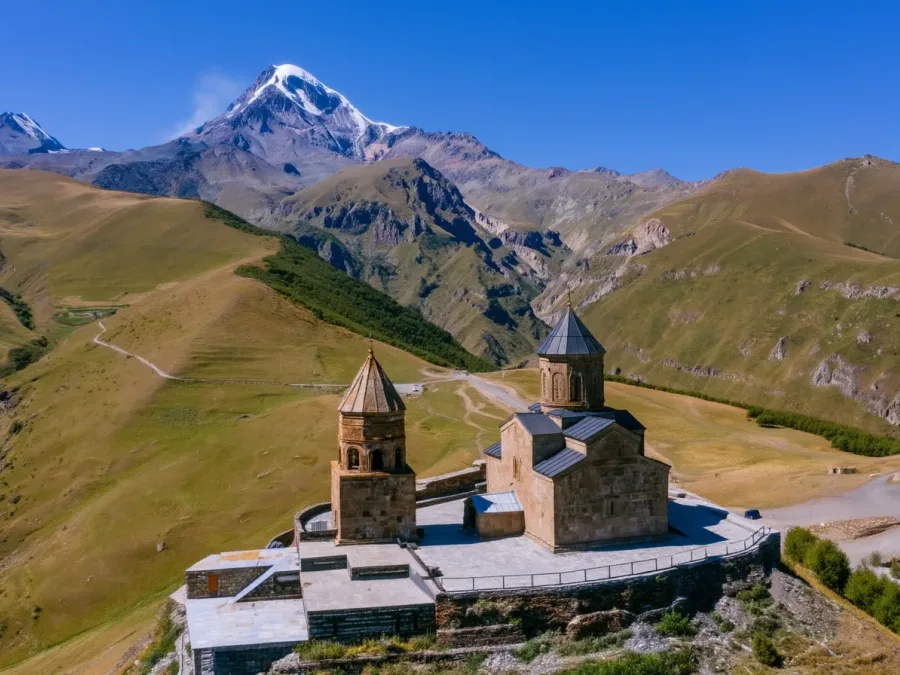
One long day works, but you will reach the church at midday along with every coach. Staying over in Stepantsminda is calmer: go up in the morning, carry on to the glacier, be back by lunch.
Kakheti: one or two days
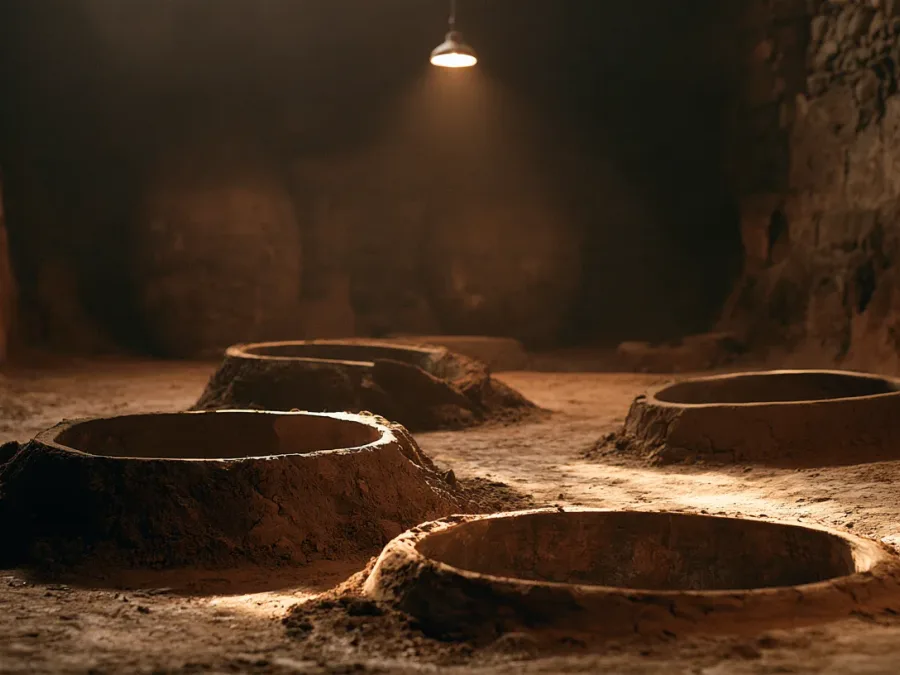
Kakheti is the wine-making east, and "wine-making" does not mean here what it means in France. Wine is made in qvevri: clay vessels holding several hundred litres, buried in the ground up to the neck. The grapes go in whole, skins and stems included, and stay for months. The method is on the UNESCO intangible heritage list, and it is not a museum reconstruction but ordinary working practice at hundreds of estates.
The practical consequence: white wine made in qvevri comes out amber and tastes closer to a light red than to the white you know. People who order a "dry white" and get something amber often assume they have been handed something spoiled. Ask for qvevri specifically, and know what is coming.
Sighnaghi is a small town on a hill above the Alazani valley, fully ringed by an 18th-century wall with twenty-three towers. Two hours will cover it, but on a clear day the whole Caucasus range is visible from the ramparts, and that holds you longer. The 9th-century Bodbe convent, where Saint Nino is buried, is next door.
Telavi is the regional centre and the easier base for touring the estates. At Tsinandali nearby is the Chavchavadze manor with an English park and a cellar laid down in the 19th century, still holding bottles from that century.
More: Kakheti, Sighnaghi, Telavi.
Svaneti: three days minimum
Svaneti is high country in the north-west where nearly every village has family towers from the 11th to 13th centuries. A tower was home, store and stronghold at once: livestock on the ground floor, the family above, narrow slits facing out. They were not built against a foreign enemy but against neighbours — the region lived by its own laws for centuries, blood feuds included, and a tower was how a family survived one.
Hence the look of these villages: a dozen stone verticals sticking out of a slope with no planning whatsoever. They are more striking from a distance than up close.
- Mestia — the main settlement, dozens of towers in the village itself, some open to climb.
- The museum of history and ethnography — medieval icons and embossed crosses kept for centuries in village churches and gathered here.
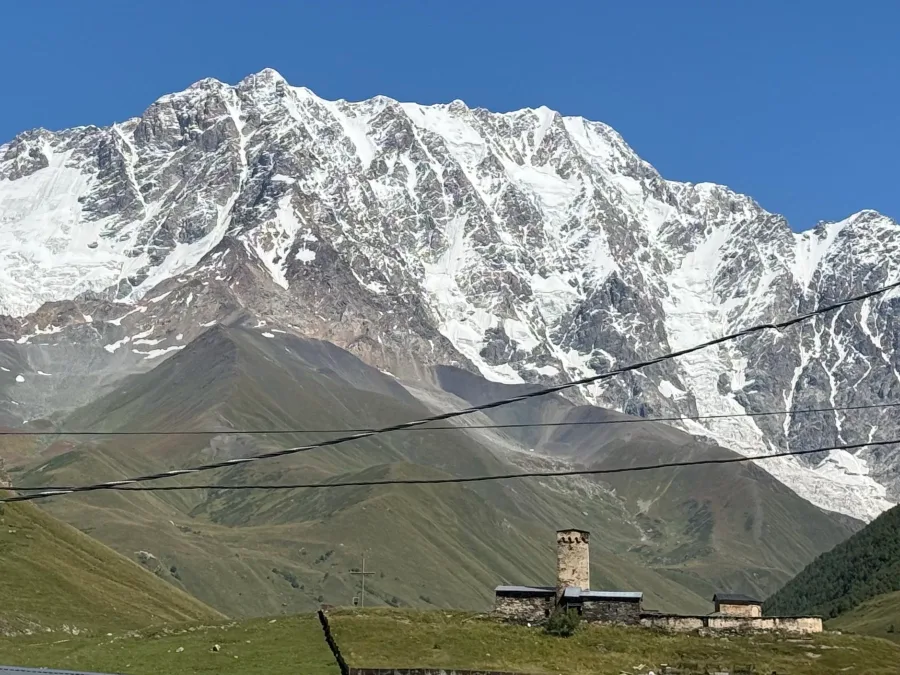
- Ushguli — a cluster of villages below Shkhara, one of the highest permanently inhabited places in Europe, on the UNESCO list.
- The Koruldi crosses — a four to five hour trail from Mestia to a panorama of the whole valley.
- Mazeri — the neighbouring valley below the twin-headed Ushba, a peak climbers rate among the hardest in the Caucasus.
Western Georgia: two days
Kutaisi is not rich in sights of its own, but it sits well: almost everything people come for is within an hour.
- Gelati Monastery, 12th century — mosaics and frescoes intact, a UNESCO World Heritage site.
- Prometheus Cave — a kilometre and a half of prepared route, part of it by boat on an underground river. Around fourteen degrees inside, all year.
- Okatse Canyon — a walkway fixed to a sheer wall, about two kilometres through forest to reach it.
- Martvili Canyon — turquoise water on the Abasha, boats under an overhanging cliff.
The coast and mountain Adjara: as long as you like
Batumi runs on contrast: glass towers and floodlights on one side, late 19th-century blocks from its days as an imperial oil port on the other. The sea is pebbly, the swimming season runs mid-June to late September, and September is usually the best month.
What starts an hour inland is more interesting. Mountain Adjara means the Makhuntseti waterfall, stone arch bridges traditionally attributed to the time of Queen Tamar, the Goderdzi pass at two thousand metres, and the cable car from Khulo to the village of Tago: nearly two thousand metres across a gorge with not a single intermediate pylon.
Between Kobuleti and Chakvi lies Mtirala national park, one of the wettest places in Europe with around 4,500 mm of rain a year. The name translates as "the weeping mountain", and it is not a metaphor.
More: Adjara, Batumi beaches.
The south: one day
Vardzia is a 12th-century cave monastery cut into a sheer cliff above the Kura under Queen Tamar. Tiers of cells, a frescoed church, passages running tens of metres into the mountain. It is cool inside even in July, and the links between tiers are in places narrow enough that you take your backpack off.
On the way there: Rabati fortress in Akhaltsikhe, fully restored in 2012, where a church, a mosque and a synagogue stand inside the same walls. And the spa town of Borjomi with its pump room in the central park, where the mineral water is drunk straight from the spring — warm and distinctly salty, nothing like the bottled version.
Tusheti: a separate conversation
If the time and the window allow, Tusheti offers what nothing else in the country does: slate-roofed villages where a handful of people winter, power partly from solar panels and no mobile coverage at all. Omalo, Dartlo, Shenako, and the trails between them.
More: Tusheti.
Getting between it all
Intercity public transport exists, but it runs on minibus schedules rather than yours and simply does not reach half the places on this list. Two realistic options: rent a car or hire a driver for the day.
The difference is not comfort but information. The roads to Svaneti, Tusheti and Goderdzi need experience, and today’s state of a pass is known by someone who drives it constantly, not by an app.
See what is available: tours, intercity transfers.
When to go
July and August bring the beach season, forty degrees in Tbilisi, and every mountain road open. November and April are the worst timing: mountain routes closed at one end or the other, and the sea too cold. Winter runs the ski resorts, empties and cheapens the lowlands, and leaves Tbilisi one of the few places that is genuinely pleasant to walk in the cold months.